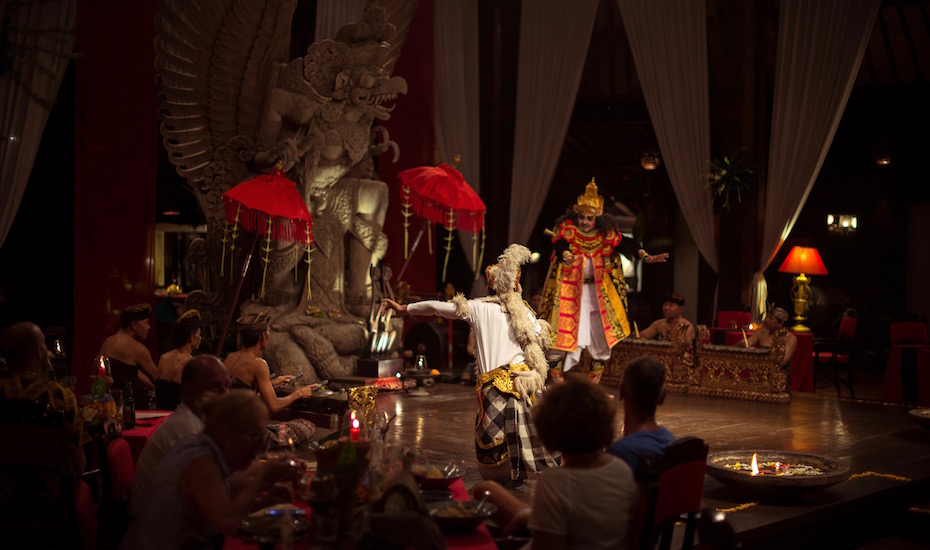
Bali Agung Show at Bali Theater

Bali Agung Show Present Colossal Traditional Dance in Bali Safari Marine Park

Bali Agung is a theatrical art performance combining a Balinese legend, lively dance choreography, vibrant costumes, dramatic music compositions, state-of-the-art lighting and sound systems, luxurious seating, roomy lounges, and modern facilities. The Bali Agung show is performed at the Bali Theatre, located within the Bali Safari and Marine Park in Gianyar. The Bali Theatre brings a whole new dimension to theatrical art performances by presenting a combination of traditional and contemporary dance, modern puppetry, and features the animals of the Bali Safari Marine Park as co-stars of the show.


The Bali Agung show

The Bali Agung show presents a colossal group effort by 150 performers who bring to the modern stage numerous allusions to the island’s past. The story unfolds as a retelling by a shadow puppeteer who narrates most of the show with his son. The two, in conversation, reveal many important aspects to accompany the stage performances. The story is the epic Balinese love tale of King Sri Jayapangus and Chinese princess Kang Ching Wei. Episodes are interspersed with scenes depicting aspects of the island’s culture and village life. A royal palatial atmosphere and various stage elements that form fantastical dream realms serve as settings for the romance and heroism depicted in the tale. The performances take you on a journey that recounts the romantic, tragic and heroic epic of the two main characters, culminating in the king’s intertwining romance with Dewi Danu, the water goddess of the volcanic lake of Mount Batur


Bali Agung’s main stage is separated from the audience by a narrow pond. Initial episodes feature boatmen pedaling across and real ducks herded through the water. The opening scenes present a regal parade with the king’s character riding an elephant, followed by his loyal subjects and various animals from the Bali Safari and Marine Park. Other animals, including tigers, camels, pythons, eagles and many exotic birds, appear on stage, and in the air, during the performance. A similar episode shows several exotic animals disembarking from the Chinese vessel which lands on Bali’s shores for trade with the Balinese king, one of the central characters. The mega-stage features specially designed props, curtains and water cannons that combine to bring spectacle and dramatic effect to the whole storytelling.


Good to Know about Bali Agung


Bali Agung runs for an hour and starts at 14:00 daily, except Mondays. The show is narrated in English; however, the audience is able to read short narrations in selected languages before the performance. Nevertheless, the spectacular show is strong in visual aspects through motion, colors, and sound. Those watching with young kids might reconsider the duration of the show, and to opt for seating within the Bali Theatre that is not too close to the stage and river pond.

Bali Agung Location: Bali Safari & Marine Park, Jalan Bypass Ida Bagus Mantra, Gianyar Tel: +62 (0)361 950-000

The Most Popular Bali’s Nature Activities for Travelers

The Most Popular Bali’s Nature Activities for Travelers

Tourist attraction in Bali besides being found in the art and culture of the Balinese people, the appeal of Bali is also found in natural factors. Bali nature tourism such as the beauty of white sand beaches, sunset views, and mountain views.

Bali nature tourism is the primary interest of most visitors when they have holidays in Bali. At present vacationists have a desire, to be closer to nature when on vacation in Bali. Due to getting tired of urban areas busyness. Because of the high interest of tourists for holidays to Bali’s natural attractions, many investors engaged in the Bali nature tourism business, by investing in providing nature holiday activities in Bali.


1. Rafting Tour In Telaga Waja River Karangasem


For Bali rafting activities, the Telaga Waja river has a different river rapid character than other rivers in Bali. Like the Ayung River in Ubud and the Melangit river in Klungkung regency. The Telaga Waja River located in Karangasem regency and offers the longest whitewater rafting route in Bali. The Telaga Waja river tracks approximately 16 km. To be able to complete rafting by going along the rafting track on the Telaga Waja river. It will take two hours to even 2 hours 30 minutes, depending on the speed of the river rapids.


2. Ayung River Rafting Ubud

The white water rafting activity on the Ayung River is better known as the Ayung rafting Ubud. Due to the location of the Ayung river is in the area of ​​Ubud’s Bali. Whitewater rafting on the Ayung River in Ubud preferred by tourists who want to relax during whitewater rafting trips. Also, the Ayung River Ubud has breathtaking river views, with lush trees and unique carvings on the river walls.


3. Single Parasailing In Tanjung Benoa

The most popular location for parasailing activities in Bali is on the Tanjung Benoa beach. Some of you may ask, what is parasailing game? Parasailing is flying action using a parachute. The chute is full of a speedboat to make it flew with the participant. Parasailing typically held in the middle of the sea. To be able to the fly parasailing chute the rope will be tied to a parachute and then pulled by a speedboat. In Tanjung Benoa there are two types of parasailing rides, namely: Single parasailing, which can accommodate 1 participant to fly. Tandem parasailing adventure, participants flew two to three people together at once How much money does it cost to go parasailing in Tanjung Benoa Bali? The price for parasailing ride in Tanjung Benoa Bali depends on the type of parasailing ride that you want to book. The single parasailing ride in Tanjung Benoa is cheaper compared to the tandem parasailing ride in Tanjung Benoa Bali. Also, Tanjung Benoa parasailing price affected by the place when you make a parasailing booking. If you make a direct reservation for parasailing ride, the cost for parasailing ride in Bali become expensive, compare if you make an online parasailing booking.


4. Seawalker/Ocean Walker

Seawalker game in Bali is also known as ocean walker, or sometimes people call it as a marine walk. So what kind of marine activity is Bali sea walker? Seawalker is a walking activity on the seafloor. To allow participants to walk on the seabed, the participant required to use a watertight helmet. Seawalker game is preferred by tourists who do not have diving experience or swimming skill but want to feel and see the beauty of the underwater scenery directly. There are two famous locations for Bali sea walker activities, namely: Seawalker activity in Sanur beach or better known as Sanur Ocean Walker. Sea walking activity in Tanjung Benoa Beach or known as Tanjung Benoa Seawalker.


5. Banana Boat Ride in Bali

Banana boat is a type of inflatable boat that shapes like a banana. The activity of a banana boat ride in Bali preferred by tourists who have a vacation with family. Especially during holidays with children. Speedboat used to move the banana boat, and a rope tied to a motorboat, and the banana boat then pulled by a speedboat. Many places in Bali provide banana boat rides. Such as in Sanur Beach, Tanjung Benoa beach, Amuk Bay Karangasem, and Lembongan Island. However, the most popular location to join banana boat ride in Bali located in Tanjung Benoa beach. Due to Tanjung Benoa beach location near Kuta, Seminyak, Nusa Dua, Jimbaran and other areas on the southern part of Bali. Also, the banana boat ride price in Tanjung Benoa is lower compared to other places in Bali.


The Best Of Balinese Culture

Culture vultures, this one’s for you! From ancient temples and age-old rituals, to traditional recipes and local flea markets – this is the best of Balinese culture and our top picks for exploratory experiences that you’ll want to tuck in to!

Today is the holy day of Galungan, when the Balinese believe that their ancestors return to earth for 10 full days to spend time with their loved ones. Imagine if your ancestors were popping home for a visit, what would you do? Make the place look spic and span, of course! So for days on end, the Balinese have been tirelessly decorating their homes, temples and even the streets with traditional offerings and “penjor”, to welcome ancestors back to the island. So what better time to put on your Sunday’s best and learn a little more about Bali’s rich culture and traditions? From ancient and epic works of art, architecture and cuisine, to the mesmerising spirituality and religion on the island, we’ve put together all of the fab things to see and do in this tropical paradise that’ll give you some insight into the day-to-day life of the Balinese. Whether you want to dig a little deeper into Bali’s wonderful history, values and beliefs, or you want to learn a thing or two about Balinese food, dance and art – culture vultures, this one’s for you… Welcome to the Island of the Gods! 

Get a Taster of Balinese Tradition at a Cultural Evening

With its wild, wonderful and otherworldly traditions, Balinese culture might seem a little daunting to a first-timer. So to ease you into this magical world, get a taster of Balinese culture at a Cultural Evening, where music, art, food and dance collide. Our fave is at Hotel Tugu – one of Bali’s first and only wholly Indonesian luxury hotels that’s dedicated to showcasing local culture. The Cultural Evening takes place every Thursday night, featuring an awesome dance performance and Balinese dinner to revive and preserve almost-forgotten stories from the past, interpreted through traditional dances, music and costumes. Right in front of your dining table, mesmerising dancers and performers take to the stage whilst an enormous boat-like platter of traditional recipes are served, featuring all of our favourite Balinese staples like ayam betutu, lawar and plenty of spicy sambal – yum! It’s a fun and totally delicious evening presenting genuine Balinese culture at its best, wrapped up in an authentic Balinese atmosphere – perfect!


Visit a Sacred Temple

Bali is home to an endless array of ancient temples, with several of them being the island’s most iconic landmarks thanks to their magnificent centuries-old architecture set against exotic backdrops. Though you’ll find temples all over Bali and on every street corner, there are a few stand-out and must-visit temples that’ll really give you a taste of the island’s fascinating religious beliefs and dedication to the Hindu Gods. One of the most visited has to be Tanah Lot Temple, thanks to its offshore location that sees jaw-dropping sunsets every evening. The best time to visit is during the holy day of Kuningan, when pilgrimages usually take place, and on the temple’s anniversary four days after Kuningan when thousands of Balinese flock to the site to pray and lay their offerings. Another stunning temple is Pura Luhur Uluwatu, set on top of the Uluwatu cliffs with the surfing beaches below. Cultural performances such as the Ramayana ballet or Kecak dance take place here, in a specially designated amphitheater during the golden sunset hours for a totally awesome vista. For a temple visit that’s a little off the tourist track, there is the Besakih Temple, often referred to as Bali’s ‘mother temple’, located in the village of Besakih. Here, a huge complex of temples and shrines await, with Besakih Temple sitting 1,000 metres above sea level on the south-western slopes of Mount Agung, Bali’s active volcano. Last but certainly not least, Ulun Danu Temple in the hills of Bedugul is one of the most photographed, thanks to it’s magical location in the middle of Lake Bratan. When the early morning or late afternoon mountain fog creeps through, the temple actually looks as if it is floating – it’s pure magic!


Try a Balinese Cooking Class

Food is a big part of the Balinese lifestyle, so luckily for us sambal-aholics, the local communities are more than happy to welcome visitors into their homes to get a taste of authentic village cooking. There are now countless culinary adventures on the island that help to unlock the secrets to Bali’s totally addictive flavours, guiding you through local markets to find traditional herbs, spices and farm-fresh ingredients, before demonstrating the lengthy preparation and cooking methods that sometimes take days to complete. Get ready to get your hands dirty, because if you want to try the ever-succulent Ayam Betutu staple, you’ll soon find yourself rubbing and massaging a whole plucked chicken in basa gede [Bali’s signature base paste] before wrapping it in palm leaves and cooking it over coconut husks for hours until smokey and tender! With plenty of time to wait before you get to sample your delicious Balinese creation, the cooking classes often offer the chance to chat to the locals, make simple offerings, speak to the rice farmers and learn about authentic coconut-oil processing – until it’s time to dig in!


Scale the Island’s Iconic Landscapes

Few places on earth are as diverse as Bali. Where else in the world can you climb a volcano at sunrise, scuba dive by lunchtime, gaze at emerald green rice paddies in the afternoon and dine beachfront by sunset? So to make the most of the island’s iconic landscapes, sign up to a tour or find yourself a guide to explore Bali’s most sacred spots. You’ll want to scale one of Bali’s majestic active volcanos, like Mount Batur for a sunrise vista above the clouds, or for avid hikers, take on Mount Agung – the most sacred of Bali’s peaks – for a 6-7 hour trek. You can’t visit Bali without seeing the infamous lush green rice paddies either, and the Tegallalang rice paddies in Ubud are by far the most splendid! Stop at the top of the valley on the road for a panoramic emerald vista for miles. A farmer who owns the land is usually there to invite you to sample his green coconut drink, and you can buy Balinese woven hats that he hand-makes from coconut leaves. This ancient valley is a wonderful insight into the traditional Balinese cooperative irrigation system [named subak].


Watch a Traditional Dance

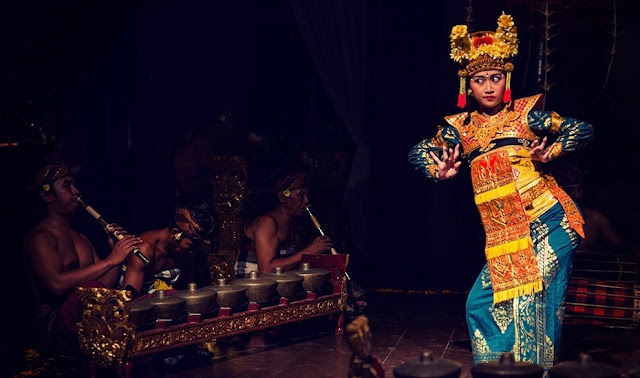
For the Balinese people, dance is more than just an ancient tradition, but an integral part of religious and artistic expression that brings together the community. There are many different types of Balinese dances, and most involve the Balinese version of the Hindu Ramayana epic. If you are heading to the Pura Luhur Uluwatu Temple, you’ll get to check out the Kecak Dance in the amphitheater, where one hundred men [wearing only a loin-cloth each] form rows of circles around a coconut oil lamp in the centre. First, they move their bodies rhythmically to the left and to the right, chanting the words cak ke-cak ke-cak ke-cak continuously, in slow rhythm. Gradually the rhythm speeds up and in turn, they each lift their hands, trembling, into the air. You won’t forget this experience in a hurry – it’s quite a spectacle! For a less dramatic but equally breathtaking performance, take a trip to Ubud for the traditional dances at the Ubud Palace [from 7:30 – 9pm every night]. Here, beautiful Balinese girls in ceremonial attire dance hypnotically, contorting their eyes and fingers to tell age-old chronicles through movement. These dances can be seen all over Bali, but are mostly found in and around Ubud where they are put on regularly for travellers. Fancy getting involved yourself? Head to Denpasar where several cultural centres and dance schools will teach you the tricks of the trade.


Shop ’til You Drop at a Traditional Market

There are tonnes of markets all over Bali selling all sorts of goodies and traditional tidbits – and each one is worth a visit to get an insight into local Balinese life, as well as grabbing yourself a bargain! From late night snacks to traditional homewares, religious ritual items and art pieces – there’s a market for everything. Try the Badung Market in Denpasar for the real deal – Bali’s biggest market that is like an enormous Garage Sale of island goods, from sarongs and sunglasses that’ll later be trebled in price and sold on Kuta Beach, to fruit and vegetables, art pieces and kitchenware – this market hums almost 24/7. For something a little less chaotic, try the Kuta Night Market for hot-off-the-wok street food, the Ubud Traditional Art Market for artisan paintings and sculptures, the Jimbaran Fish Market for fresh from the ocean delicacies, the Flea Market in Seminyak for gifts and that all-important Bintang singlet, or the Frog Market in Tabanan for vintage clothing and piles of homewares that you’ll need to dig through to find a treasure – there’s plenty of them! Check out all the deets – and more – here.


Discover the Power of Balinese Healing

‘Eat, Pray, Love’ turned the spotlight on Balinese traditional healing, but these practices, blending natural herbs and spices, holistic therapies and ancient wisdom to cure physical and mental illnesses, have been a long tradition in Bali. The Balinese live equally in two worlds: the seen or conscious world called sekala, and the unseen or psychic world, called niskala. If someone falls ill, both of these worlds must be addressed in order to heal them. A Balian [traditional Balinese healer who works with divine energy] will be consulted, and they will use jamu [herbal medicines derived from the lush Bali landscape], massage and energy healing to help cure the sick. If you are wanting to visit a traditional Balinese Healer, check out our roundup of Bali’s best healers, and say goodbye to depression, stress, and physical pains.


Stick Around for a Ceremony

Bali’s ceremonies are vital to the Balinese for maintaining peace on the island, so understandably, these celebrations and rituals are take very seriously. Whether it’s a wedding, cremation, teeth-cutting ceremony, or the most prominent celebration, Nyepi, entire Balinese communities will put their year’s savings into following tradition and spending big bucks on extravagant temples, offerings and processions. Perhaps the most costly is Nyepi, also known as Bali’s Day of Silence and the New Year according to the Balinese calendar. On Nyepi Day, everyone on the island must stay indoors in silence with no electricity or lights, yet the night before is arguably the wildest of all the Balinese ceremonies, where large, oversized demon structures [called Ogoh Ogoh] are paraded through the streets to keep evil spirits away for the year ahead. Communities spend a fortuen on these structures and celebrations, and there’s even competitions in Denpasar the week before Nyepi to judge the best Ogoh Ogoh creation. Like all of Bali’s unique ceremonies, it’s a sight to see that you won’t want to miss.


Enjoy The Island of the Gods, Honeys!

This Bali Starbucks Is Southeast Asia's Largest

Starbuck Dewata Coffee Sanctuary, a Stop and Smell Coffee in Bali

Starbucks Dewata Coffee Sanctuary is a new hangout place that has been opened on 12 January 2019. It is the largest yet in Southeast Asia! As you would expect, this is no ordinary Starbucks. With a striking design and unique experience, this outlet is also home to a coffee farm.


STARBUCKS DEWATA COFFEE SANCTUARY IN SUNSET ROAD


This Starbucks outlet is just opened as the biggest Starbucks Outlet in Southeast Asian. It is reminding that Indonesia is one of the world’s largest coffee growing regions. In fact, it is the fourth largest Arabica coffee growing region in the world!

The Dewata Coffee Sanctuary marks the first Starbucks Reserve Bar in Bali and its tenth in Indonesia. A Starbucks Reserve is an immersive space designed to elevate a customer’s coffee journey, where you can find the rarest coffee and taste them in a relaxing and interactive setting.


This 20,000-sq-ft Starbucks sanctuary is located in the up-and-coming retail district of Sunset Road. So make sure to add it into your must-visit list for your next Bali trip even if you’re not a coffee person.

Starbucks Reserve Dewata Address: Jl. Sunset Road No.77, Seminyak, Kuta, Kabupaten Badung, Bali 80361, Indonesia Opening Hours: Daily, 8am to 10pm.


A NEW HANGOUT PLACE AS AN INSTAGRAM SPOT IN BALI


Easily the most striking aspect of this Sunset Road Starbucks outlet is its awe-inspiring design and stunning interior. A mix of contemporary architecture with traditional Balinese influence, the store was designed as a tribute to Indonesia’s culture and coffee heritage.


Inspired by traditional Balinese houses, the store has an expansive interior with free-flowing connected rooms. Be greeted by a two-story hand-carved wooden mural and admire the living wall filled with flora from the region as you sip your cup of joe.

Make your way to the second floor to check out the seedling nursery which is a greenhouse canopied by panes of glass. Providing an open-air experience, it also makes for quite the Instagram-worthy spot!

SEED-TO-CUP JOURNEY


As its promise to give customers a seed-to-cup journey, there’s a 1,000-sq-ft coffee farm (the size of a typical Indonesian farm) at this Starbucks location! As you enter through the concierge, you will be guided through the farm past Balinese landscaping, coffee plants, and the de-pulping station. You can also try your hand at washing, drying and raking green coffee beans! Make sure to look out for the zoetrope, animation devices that spin to give the illusion of moving images. You can watch images of coffee seedlings mature into lush, cherrying trees.

These devices are made from natural and synthetic palm stems of rattan, and up-cycled materials, covered in a traditional Balinese carving. Moving back inside at the Reserve bar, you can taste rare and small-lot coffees that you can’t find in regular outlets. To get your caffeine fix, you can head to the core bar where you can order from the Starbucks signature core beverages as well as some local specials.


SPECIAL DEWATA MENU


Did you know that Starbucks is one of the largest buyers of Indonesian coffee beans? So if you’re desperately in need of a cuppa, you won’t be disappointed. At this store, you can find several special drinks like the Lavender Latte, Cold Brew Float, Cold Brew Malt and more.


Aside from drinks, you can also grab a bite to eat from their list of pastries, sandwiches, desserts, and more. If you’re a fellow Starbucks merch collector, you’ll be happy to find exclusive Dewata mugs or perhaps you can bring home the extremely adorable Bearista!


MORE HANGOUT DESTINATIONS IN BALI


If you’re a coffee enthusiast, the Starbucks Dewata Coffee Sanctuary is your heaven on earth! In fact, we think you might enjoy a visit to the Bangkok Starbucks too, the second largest in the world. When in Bali, make sure to stay connected at all times with a 4G WiFi Device. You know you’ll be taking lots of Instagram stories! Save the hassle of renting a car and driving and instead opt for a private car charter and Bali airport transfer.


Discovering Art And History in Bali

Bali Art Museum, the places to Discover Old Art

When you are traveling, it is essential to understand the history of a place. Museums are the best places to go for this, filled with art, artifacts, and mementos of culture. Here in Bali, the culture is rich and to learn and understand it you’ll need to go to the places that display this culture in the best way. That’s why we’ve collected a list of the best museums in Bali which not only present the past but also show a glimpse of the island’s future.

5 Best Museums in Bali

1. Agung Rai Museum of Art (Ubud) 

Museums in Bali Agung Rai Museum of Art
Founded in 1996 by Agung Rai, a Balinese who is committed to preserving and developing Balinese art and culture, this museum is not just a place that has collected and preserved artworks but is also here to develop the art of painting, sculpture, dance, music and other cultural art forms. They provide the infrastructure for the surrounding neighborhoods to learn those artistic skills. Existing as more than just a museum, ARMA allows you to enjoy the special exhibitions, theater performances, dances, music and painting classes, a bookshop, library and reading room, cultural workshops, conferences, seminars, and training programs. 

Collections: The painting collection at ARMA ranges from traditional to contemporary, including the classical Kamasan Collection on tree bark, masterpieces by Batuan artists of the 30s and 40s, and the only available works to be seen on the island from 19th-century Javanese artist Raden Saleh and Syarif Bustaman. The displayed collection of foreign artists who made a contribution to the development of the Balinese arts is also available inside the museum. ARMA is one of the best museums in Bali to see the chronological development of art in Bali, from traditional pieces, influences to contemporary forms. The most popular pieces are the works by Balinese masters I Gusti Nyoman Lempad, Ida Bagus Made, Anak Agung Gede Sobrat and I Gusti Made Deblog. This is not just a regular one of the museums in Bali, it is a walk through Bali’s art history.

Agung Rai Museum of Art Address : Jalan Raya Pengosekan, Ubud, Gianyar Telephone : +62 361 976659 Website : www.armabali.com


2. Bajra Sandhi

Standing in the center of a park, Bajra Sandhi Museum displays spectacular and artistic Balinese architecture. Located in central of Denpasar, this is where you can learn a lot about the history and culture of Bali. The museum is a dedication to the struggles of the past and reminds future generations of culture and the need to preserve it. The site has numerous dioramas that depict the political and economic events of Bali dating back to thousands of years. The surrounding areas of the museum are a great place for runners, cyclists and yoga enthusiasts to enjoy the park.

Collections: One of the important collections in this museum is the Bajra, most commonly used by Hindu priests while chanting Vedic mantras during the religious ceremonies. This historical museum captures the Balinese struggle against the Dutch colonial invasion. The Balinese Struggle Monument with its Balinese architecture and detailed carvings is an important part of the museum. This one of the museums in Bali that are more frequented by locals, which makes it a less busy destination for visitors! Bajra Sandhi (Renon Monument)

Address : Jalan Raya Puputan No. 142, Panjer, Denpasar Telephone : +62 823 3027 2304.

3. Bali Museum

Again, likely Bajra Sandhi, because this is one of the museums in Denpasar, it is less frequented by tourists. This museum is definitely a heritage center that depicts Balinese culture and history. Built in the early ’30s, Bali Museum has four main structures. In Tabanan, visitors can see musical instruments and theatrical masks. In Karangasem, paintings and sculptures are on display. If you are interested in the local textile industry and its history, you can see them in Buleleng. For those who are keen to see archaeological artifacts, these can be found in Timur.

Collections: The collections stored in this museum can be classified as a prehistoric object collection. They keep a stock of artifacts that can be traced back to the megalithic period, like a sarcophagus, bronze statues from the height of the Hindu and Buddha eras, superstitious formulas, ethnographic objects, religious ceremony tools, stupid clay, many ancient tools and weapons among many others. It also houses different Balinese looms and ancient calendars.
Bali Museum Address : Jalan Mayor Wisnu, Dauh Puri Kangin, East Denpasar Telephone : +62 361 222680


4. Le Mayeur

Le Mayeur Museum used to be the home of the painter himself, Adrien-Jean Le Mayeur de Merpres. Facing directly to Sanur Beach, this memorial museum is a great example of Balinese architecture with elegant window shutters depicting the story from Ramayana. There are five rooms in this house, and each of the rooms tells a story about the love of his life, Ni Pollok. The museum helps bring to life this love story with inanimate objects preserved for everyone to view. Original antique furniture, photographs from the past and a great collection of stone and wood carvings add that extra touch to this museum. From the family home to one of the most famous museums in Bali, quite a transformation.

Collections: When you walk through each room, you will understand the love and dedication of Le Mayeur for arts and women. There is a studio room, study room, reading room, multiple bedrooms, and Ni Pollok’s vanity room. Some of his famous collections are By the Lotus Pond, Girls on Beach, Garden at Sanur, Women Around the Lotus Pond, Temple Festival in Bali, and many more. But, of course, the popular one among those is the Ni Pollok collection. Le Mayeur’s paintings of Bali are mostly depictions of everyday life. Here at Le Mayeur, not only does the building display a piece of history, the building itself is part of history.
Le Mayeur Address : Jalan Hang Tuah, Sanur Kaja, South Denpasar Telephone : +62 361 286201


5. Neka Art Museum

This museum in Ubud, Neka Art Museum, was built in 1976. It houses many art pieces where you can learn about the development of Bali’s visual arts. The collections are spread out into different pavilions inside the museum. The museum was founded by Pande Wayan Suteja Neka, whom the museum is named after. Neka Art Museum in Bali Collections: The Lempad Pavilion is built in honor of a late Balinese sculptor and architect, I Gusti Nyoman Lempad. This area is filled with unique styles of painting. The Arie Smit Pavilion was set up in admiration of Adrianus Wilhelmus Smit, a Dutch-born Indonesian painter who developed arts in Ubud.

The pavilion consists of two floors, the first displaying the works of young artists who were inspired by Smit, while the second floor features the works of Smit in various themes. The Contemporary Indonesian Art Hall Pavilion has paintings by artists from other parts of Indonesia, including stunning works by the late Affandi. There is also a pavilion dedicated to photography. Here, you can find documentation of black-and-white photos since the 30s taken by Robert Koke (one of the earliest expatriates in Bali). Pande Wayan Suteja Neka Neka is not only one of Bali’s best museums for art, but it also features a traditional keris dagger collection in one of the pavilions. As this is the founder’s own passion, he managed to collect 272 curved daggers throughout the half-century of his lifetime. Many people come to this museum bringing old and new Keris to be examined by Neka.

Neka Art Museum Address : Jalan Raya Sanggingan Campuhan, Kedewatan, Ubud, Gianyar Telephone : +62 361 975074 Website : www.museumneka.com


Wonderfull Sebila Beach, Pristine and Virgin Natural Shore

This island owns such unfinished breathtaking spots to be explored. Sebila Beach is a new destination that arises at southeastward of Nusa Penida Island which closes enough to legendary Beach of Atuh. Initially, the beach only used for fishing points by the local since there is no access yet but now the new road is being constructed. Visitors can directly arrive at this place by using a motorcycle.


Sebila Beach is located in Karang sub-village, Pejukutan administrative village about 45 minutes' drive from the district downtown center. The coastal road will be the main route, passing Giri Putri Cave Temple, Celagilandan Ocean, and Suana Point, then go up to Pejukutan Village. On three junction of village office turn left heading off to Karang Village. In the village center, take the left route and go straight along the road as the signboard. Karang Village is known as the center of traditional weaving of Rang-rang. Stopover and see the local product could be the right options.

There will be many local plantations on both sides of the road. Not far from Sebila, there is a beautiful lagoon bordered by rock cliff which called ‘Pah Gede’. It offers a perfect spot to enjoy morning sunrise above the peak of Mount Rinjani. The cliff series along Pah Gede provide stunning natural scenery. The lagoon looks like to form U letter with clear water. Some visitors agree Pah Gede point can be used for exciting jumping activities but need stairs as the way out of the water to climb up the cliff. The point does not have any sand at all, only rock cliff.

Sabila Beach Atmosphere

The atmosphere of Sebila Beach is so quiet and fresh. Despite its beauty, the area remains undeveloped, with no hotel or resort yet around. Sebila Beach presents equally memorable experiences awaiting you about the pristine natural beach, away from the hustle. Take walk along the virgin beach is so amazing with white sand and flanked by two exotic capes, Pah Gede and Juntil Cape. Let your foot touch the natural wonder with all its splendor. It is an ideal place for relaxing, camping sites, soaking and snorkeling but be aware of a strong current. As the local story, Sebila derives from words ‘Se ‘means one and ‘bila’ refers to place or source of water. It's true there still a natural well which uses as the source of water a few years ago and never dried off even in the dry season.

“A few years ago, this good use as the only water resource for the local. This is really peaceful and some of the rock on the shoreline can be a good spot for sitting down,” said Diarta Darsa which confirmed on Thursday morning (8/12). From this area, visitors also can reach Atuh Beach in 15 minutes by trekking passing Juntil Cape, if using the main route visitor should turn around back to Karang Village center and take the right way. Do not miss to visit Sebila Beach in Nusa Penida Island directly opposite Lombok Island with its gorgeous mountain of Rinjani and blue ocean carpet beyond.